


The complete guide
A Practical Guide to Choosing a Compact Beverage Fridge
When drinks start taking over the main fridge
Cans tend to find their way into every spare corner of a household refrigerator. Bottles take up door space, and a few extra drinks for visitors can leave little room for groceries. A separate beverage fridge gives those drinks their own place.
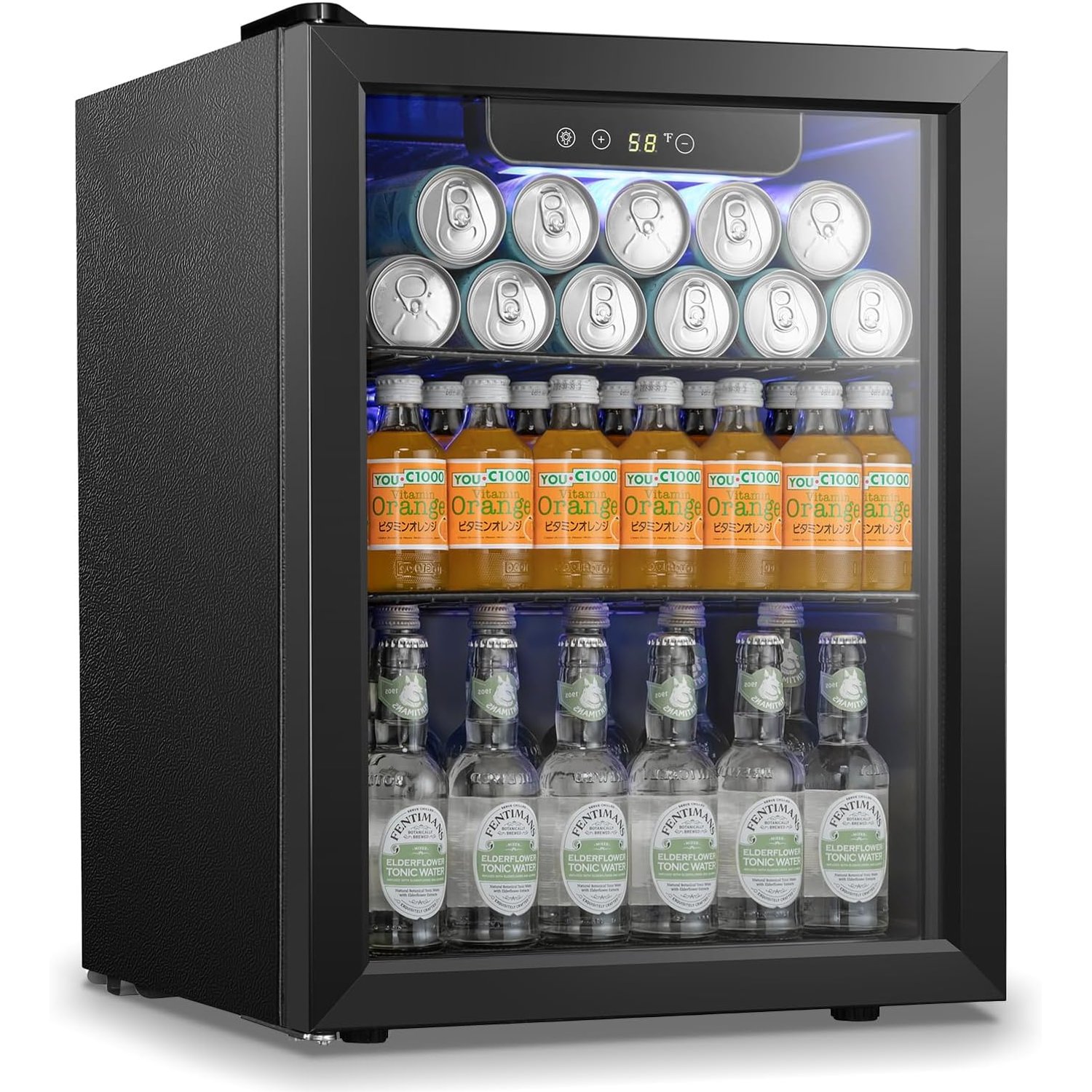
The 1.7 Cu. Ft. Beverage Fridge is designed for that job. It is a compact, freestanding model with a glass door, adjustable shelves and digital temperature controls. You can see your selection without opening the door and change the shelf layout when you swap cans for bottles.
The main buying question is not just whether it looks right. You need to know whether it fits your drinks, your room and your electrical supply. This model is listed at 115 V and is intended for beverages only. Those details matter more than any styling choice.
What this mini fridge does
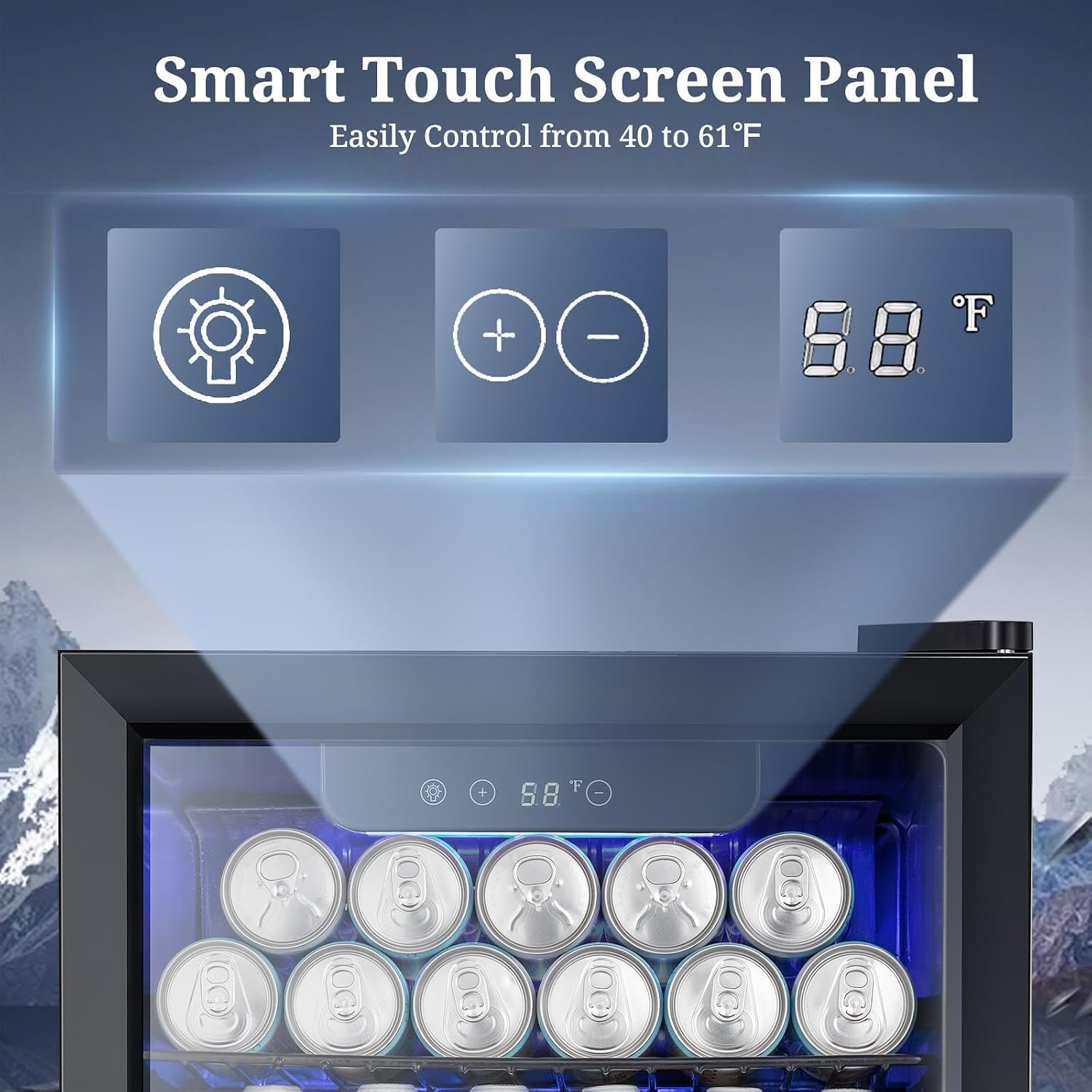
This is a compressor-cooled beverage refrigerator with a stated temperature range of 40°F to 61°F. You choose the setting through digital controls rather than relying on an unmarked dial.
That range gives you a choice of drink temperatures, but it does not make the appliance a freezer. The configuration is described as freezerless. If you need ice storage or frozen items, you will need a different appliance.
There is also an important food-storage limit. The maker says not to store fresh foods in this cooler. Do not choose it as a small kitchen refrigerator for meat, milk or leftovers.
Think of it as a dedicated home beverage cooler. It gives packaged drinks a separate space without asking your main refrigerator to do every job.
How much will fit inside?
The listed interior capacity is 1.7 cubic feet, with room for up to 70 cans. Treat that can count as a guide to a suitable arrangement, not a promise for every drink collection.
Container shape makes a difference. Slim cans, large cans and glass bottles do not use space in the same way. A mixed load may hold fewer drinks than an arrangement made entirely from matching cans.
Before choosing a 70 can beverage fridge, look at what you actually buy. If most of your drinks come in tall bottles, shelf height may matter more than the maximum can count. If you mainly store standard cans, the stated capacity may be a more useful comparison.
The two adjustable shelves give you room to change the layout. You can make space for taller containers rather than trying to fit everything into fixed openings. Exact bottle capacity and shelf load limits are not given by the maker, so check the instructions before loading.
Measure the space, including the door
The listed outside dimensions are 16.34 inches deep, 16.93 inches wide and 22.24 inches high. Measure your intended location rather than judging the fit from a photograph.
The cabinet footprint is only part of the space needed. The door must open far enough to let you reach drinks and adjust shelves. You also need the ventilation clearance set out in the manufacturer instructions.
This is a freestanding beverage fridge. Do not assume that a close-fitting cupboard or enclosed cabinet is suitable simply because the appliance fits inside. Clearances and airflow affect where it can safely go.
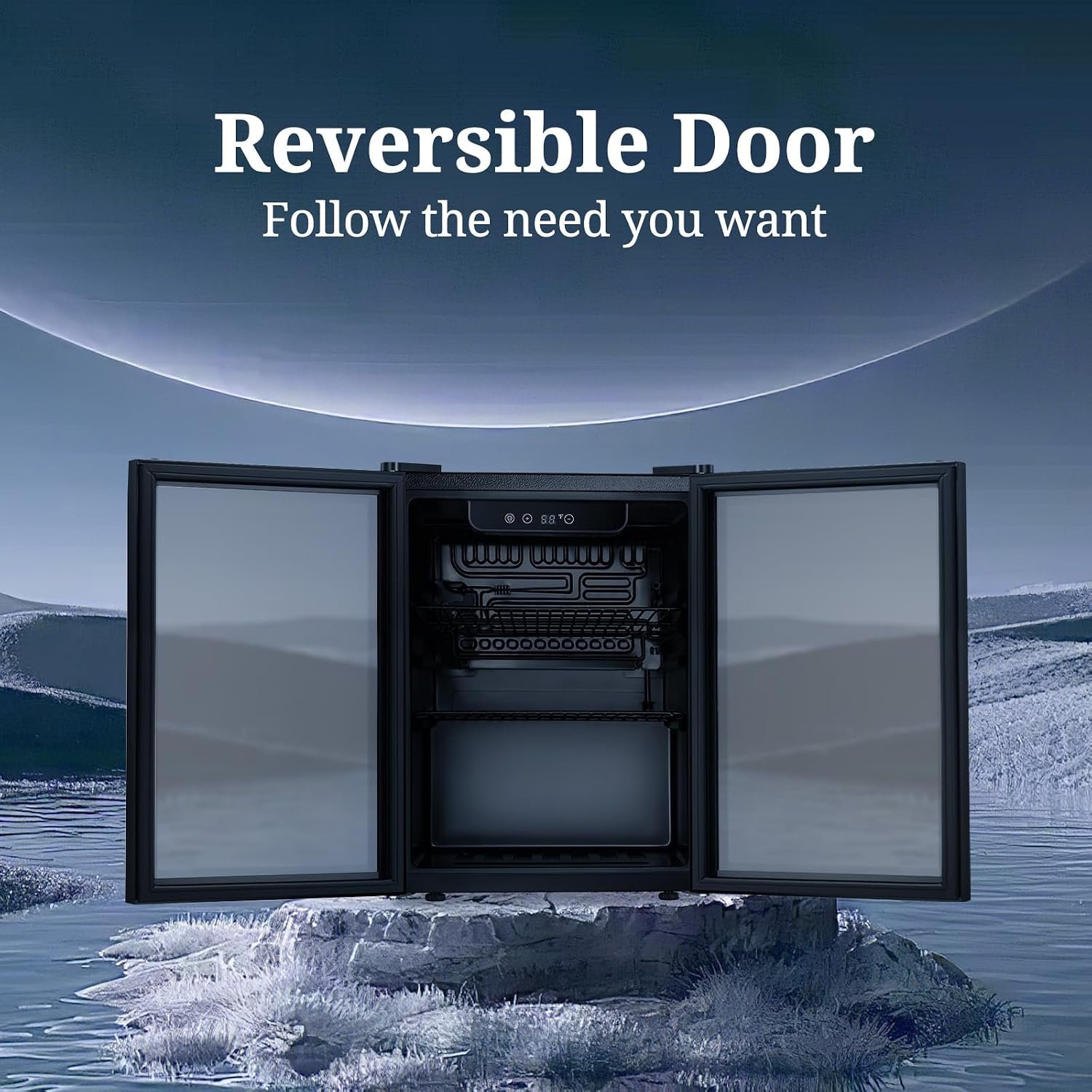
The reversible door may help when a wall or nearby furniture limits access from one side. Check the reversal instructions before planning around that feature. You will still need enough room for the door to swing and for you to stand in front of it comfortably.
Check the electrical requirements first
This model is specified at 115 V. That is a key check for a catalogue serving different countries, since local mains supplies are not all the same.
Do not assume that a plug adaptor makes an appliance suitable for a different voltage. The plug type is not given by the maker by the maker, and the maker's description does not establish compatibility with every market.
Before buying, confirm the appliance's electrical requirements against the supply where you intend to use it. Ask for clarification if the voltage or plug is uncertain. Do not connect it until compatibility is confirmed.
This check also matters for gifts. A compact fridge can be useful, but the recipient needs a suitable power supply as well as enough floor or counter space. Confirm both before arranging delivery.
Choose a location that suits daily use
A small drinks fridge is most useful when it is easy to reach without getting in the way. That might mean a shared office area, a room used for relaxing or a suitable countertop.
For countertop placement, check the surface carefully. The appliance weighs 16.1 kg before you add drinks. The support needs to be stable and suitable for the full loaded weight, not just the empty cabinet.
Think about how you will use the space around it. A door that opens into a walkway can become annoying even when the fridge itself fits neatly. Leave access for cleaning and for reaching the power connection safely.
The maker describes quiet operation, but it gives no measured sound level. A compressor appliance should not be assumed to be silent. If you are choosing an office drinks fridge for a very quiet workspace, that missing noise figure is worth considering.
What the glass door adds
A glass door mini fridge lets you check what is available before reaching for the handle. That can be helpful when several people share the drinks supply or when you want to see what needs replacing.
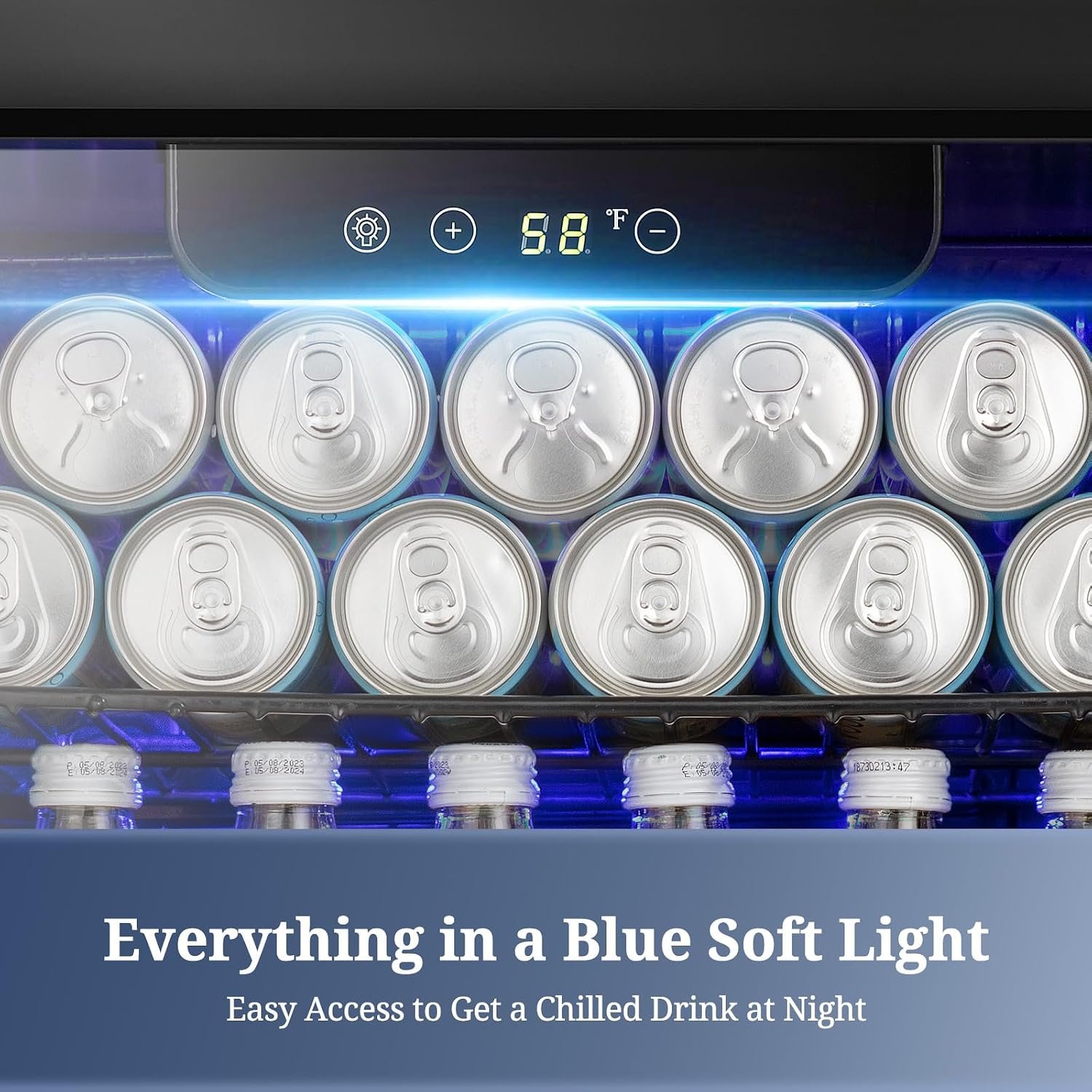
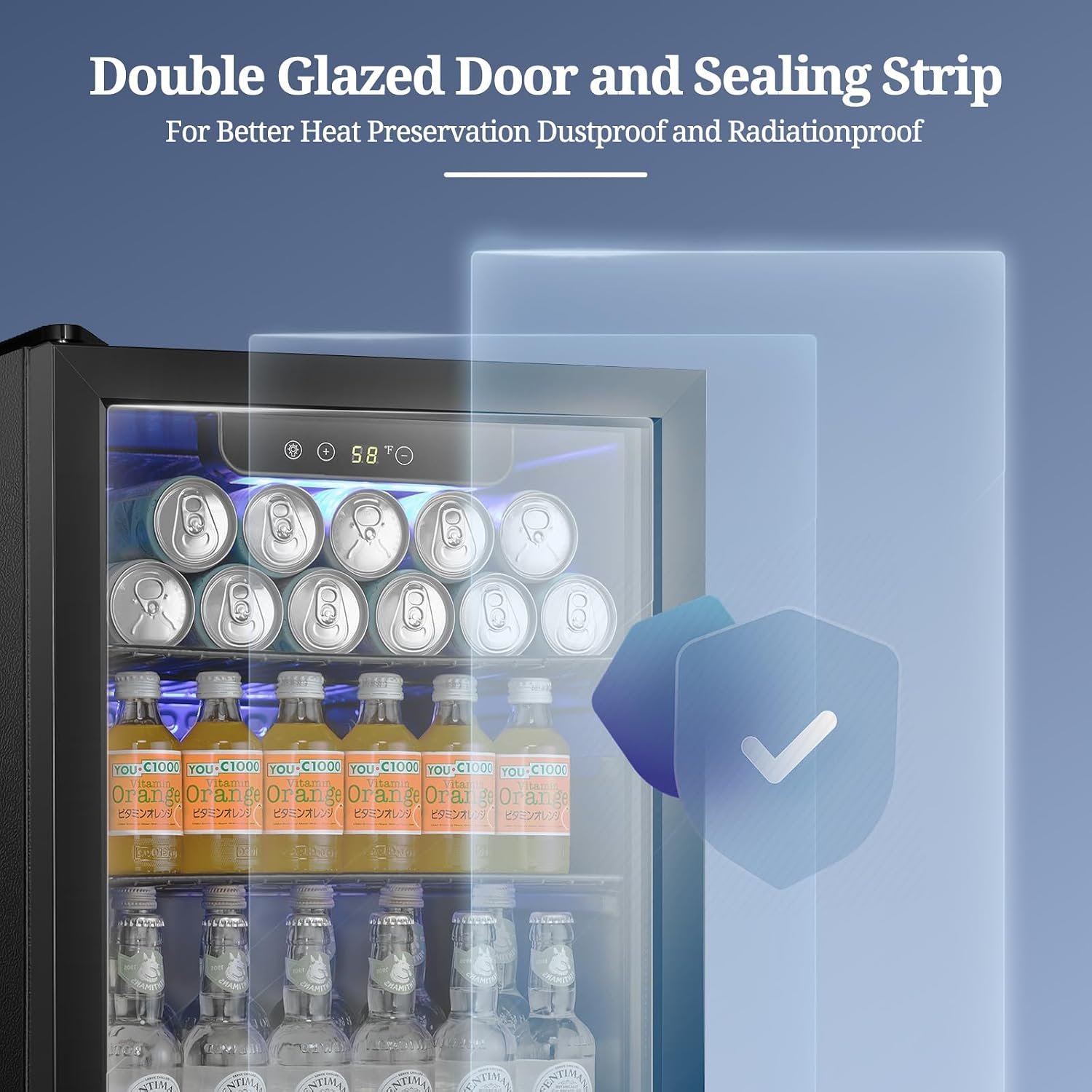
This model has a tinted, double-pane tempered glass door. Blue LED interior lighting helps make the contents visible. The result is a clear view of your drink selection rather than a closed cabinet front.
Visibility also encourages a tidy layout. Grouping similar containers together makes it easier to find a drink and see when one type is running low. There is no need to fill every gap simply because you can see it.
The specifications also list a key lock. It may be useful when planning access to shared drinks, but it should not replace supervision or sensible storage decisions.
Set up the shelves around your habits
An adjustable shelf beverage fridge is worth arranging around the drinks you use most often. Start with your usual containers rather than a layout designed only to reach the largest possible count.
If you buy a mix of cans and bottles, set aside enough height for the bottles first. Then use the remaining shelf space for cans. Avoid forcing containers under a shelf or wedging them against the door.
Leave room for air to move inside. A tightly packed fridge may be awkward to use, and a full-looking interior does not always mean a useful arrangement.
Keep heavier items stable and follow any shelf loading limits in the manual. Those limits are not given by the maker by the maker. When your drink selection changes, take a moment to reset the shelves instead of making an unsuitable layout work by force.
Understand the temperature controls
The digital temperature beverage cooler offers settings between 40°F and 61°F. Choose a setting that matches how you like your drinks, while also following any storage directions on their packaging.
Do not assume that every beverage has the same storage needs. A product that requires a temperature outside this fridge's stated range needs a different solution.
The available information does not give a pull-down time, so there is no supported promise about how quickly warm drinks will chill. Plan ahead rather than expecting a newly loaded fridge to cool everything at once.
Follow the first-use instructions too. Transport, positioning and startup guidance should come from the appliance manual, not from general advice for a different fridge.
Care and manual defrosting
The defrost system is listed as manual. Read the instructions so you know when defrosting is needed and how the manufacturer wants it done.
Unplug the appliance before cleaning or defrosting. Do not chip away ice with a knife or another sharp tool. Protect the interior surfaces and cooling parts from damage.
For routine cleaning, use a soft cloth and a mild cleaning solution suitable for the surface. Wipe away residue and dry the shelves and interior before replacing drinks. Clean spills when you notice them rather than leaving them under containers.
Give the door seal gentle attention, and keep ventilation openings clear. Avoid abrasive cleaners on the glass. Regular, simple care is more useful than an occasional harsh clean.
Check the details that are not given by the maker
Some buying questions cannot be settled from the maker's description. There is no measured noise level, confirmed plug type or reliable annual electricity-use figure.
The source contains an energy entry expressed in watts, but that is not a yearly consumption figure. It should not be used to estimate annual running costs or compare efficiency with another fridge.
Check its terms and regional coverage before purchase.
These are sensible questions to ask before ordering any appliance. They help you compare products on the details that affect ownership, not just appearance.
The short version
This beverage refrigerator offers a separate place for drinks, with a 1.7 cubic foot interior, two adjustable shelves and a visible glass-door layout. Digital controls cover a stated range of 40°F to 61°F.
Choose it for beverage storage, not fresh food or freezing. Measure the available space, allow the required ventilation and confirm the 115 V electrical requirements before buying.
If those checks suit your home or workplace, the next step is simple.